Plastics: The 1 Through 7 Codes
A chemist's appraisal of the Resin Identification Code (RIC) system. Understanding why melting points, intrinsic viscosities, and polymer branching dictate curbside recyclability.
The Seven Resin Classes in Modern Logistics
Created by the Society of the Plastics Industry in 1988 and modernized under ASTM International D7611, the resin identification codes facilitate automated optical and sink-float sorting at Materials Recovery Facilities (MRFs).
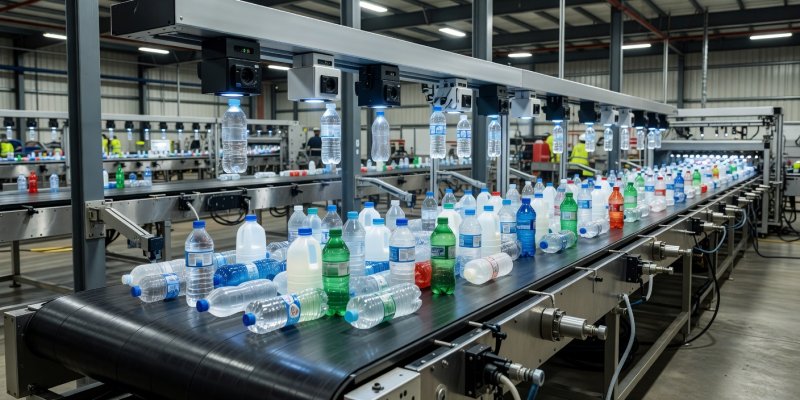
1: Polyethylene Terephthalate
Primary Applications: Water bottles, soft drink carafes, clamshell produce containers, and polyester textile packaging.
Recycling Mechanics: Highly valued commodity. Pellets are de-polymerized or mechanically shredded into flakes, washed in hot caustic baths, and spun into rPET fiber or bottle-to-bottle food grade preforms.
Contamination Pitfall: Colored green and amber bottles significantly degrade batch purity compared to transparent clear stock.
2: High-Density Polyethylene
Primary Applications: Milk bottles, shampoo bottles, domestic detergent jugs, and fuel tanks.
Recycling Mechanics: Unbranched polymer chain structure gives high tensile strength. Melts at approximately 130°C. Robust secondary markets convert flake into outdoor decking, drainage pipes, and industrial buckets.
Curbside Reliability: Universally accepted by virtually every municipal collection program globally.
3: Polyvinyl Chloride
Primary Applications: Blister packaging for consumer hardware, plumbing pipe cut-offs, shrink sleeves, and medical tubing.
Recycling Mechanics: High chlorine content releases corrosive hydrochloric acid vapor during pyrolysis and thermal re-extrusion. Severely contaminates PET recycling streams if separated poorly.
Curbside Fate: Landfill or hazardous incinerator stream. Never combine with clear PET bottles.
4: Low-Density Polyethylene
Primary Applications: Squeeze bottles, shrink wrap overwrap, dry cleaner bags, and bread bags.
Recycling Mechanics: Highly branched molecular chains result in low density and pliable flexibility. However, thin film tangles in rotating sorting screens at standard MRFs.
Curbside Fate: Requires dedicated front-of-store return bins rather than mixed household bins.
5: Polypropylene
Primary Applications: Yogurt containers, prescription pill vials, automotive battery housings, and microwavable meal trays.
Recycling Mechanics: High melting point (around 160°C) makes it ideal for thermal food containment. Near-infrared (NIR) sorters identify PP rapidly.
Curbside Status: Increasingly embraced by municipal programs as downstream demand grows for automotive and paint canister re-compounding.
6: Polystyrene
Primary Applications: Expanded polystyrene (EPS) protective foam blocks, disposable coffee cup lids, and clear brittle bakery packaging.
Recycling Mechanics: EPS is 95% ambient air by volume, making long-distance freight economically prohibitive without local densification / cold compaction machines.
Curbside Status: Rejected by over 90% of domestic curbside operations worldwide.
7: Other / Multi-Material Blends
Primary Applications: Polylactic acid (PLA) bioplastics, polycarbonate sunglasses, acrylic panels, and multi-layer metallized barrier pouches.
Recycling Mechanics: Catch-all classification for polymers not fitting 1 through 6. Incompatible chemistries prevent combined thermal molding.
Handling: Direct toward designated industrial composting (if certified PLA) or general municipal residual waste.
Technical Comparison Matrix
| Code | Polymer Name | Melting Temp | Curbside Acceptance |
|---|---|---|---|
| 1 | PETE | 250–260 °C | Universal (98%) |
| 2 | HDPE | 130–135 °C | Universal (95%) |
| 3 | PVC | 160–210 °C | Extremely Rare (<2%) |
| 4 | LDPE | 105–115 °C | Store Drop-Off Only |
| 5 | PP | 160–165 °C | Moderate to High (65%) |
| 6 | PS | 240 °C | Very Low (<5%) |
| 7 | Other | Variable | Negligible (<1%) |